Hatshepsut: "The OG Feminist"

They said a woman couldn't be pharaoh.
She did it anyway.
Early Life and Royal Marriage
Hatshepsut was born around 1505 BCE into Egypt’s royal family, the daughter of Pharaoh Thutmose I. She was raised inside the machinery of power, religion, and statecraft, learning how the kingdom functioned from the center rather than the sidelines. In royal Egypt, marriage within the family was common as a way of preserving dynastic legitimacy, and Hatshepsut later married her half-brother, Thutmose II.
She was expected to serve as queen, support the throne, and strengthen the dynasty through ceremony, diplomacy, and succession. Few would have imagined that she was preparing for something far greater.
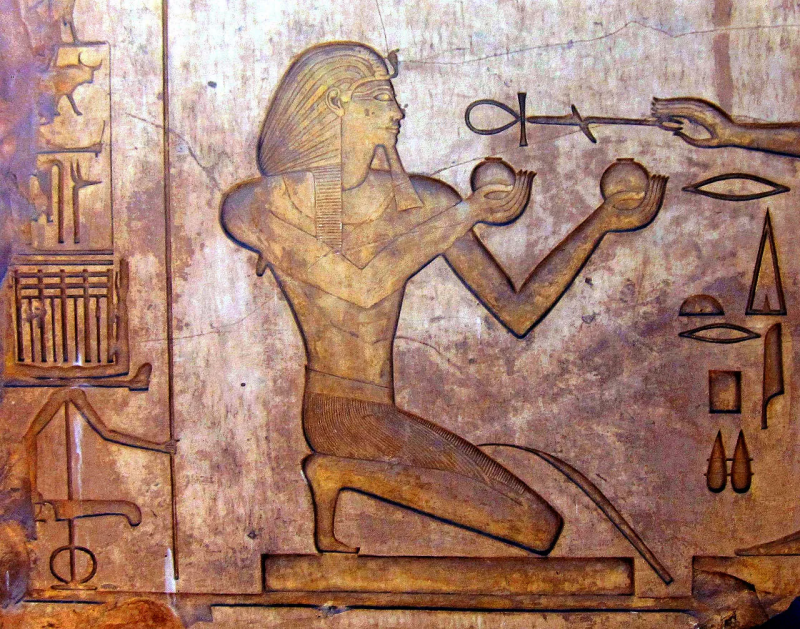
Thutmose II depicted at Karnak Temple sourced from Egypt Museum
Widowhood and the Regency
When Thutmose II died, the throne passed to his young son, Thutmose III, who was still a child. Hatshepsut stepped in as regent, the expected role for a senior royal woman guiding a minor heir until he came of age.
Egypt had endured periods of instability in earlier generations, including foreign threats, internal disruption, and inconsistent leadership. The kingdom was recovering, but still vulnerable. Its economy needed strength, its borders needed confidence, and the throne needed steadiness.
As regent, Hatshepsut demonstrated that she could govern effectively. She handled administration, religious authority, and the public image of continuity at a moment when Egypt needed competence more than convention.
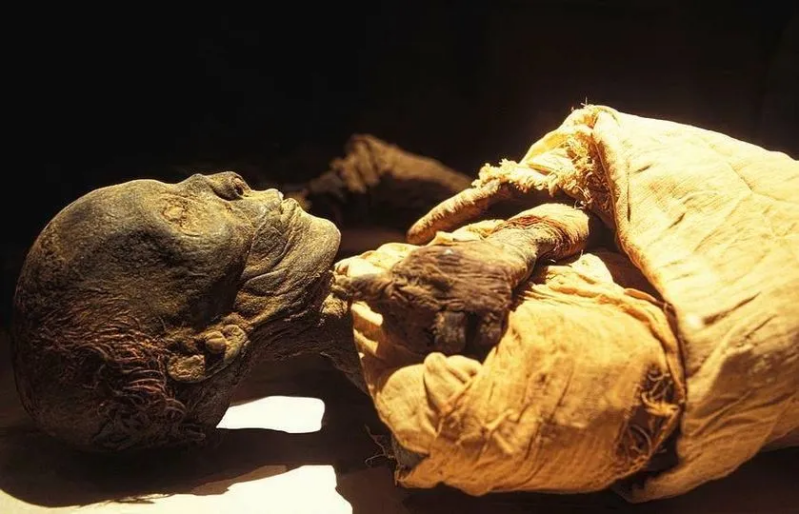
Mummy thought to be that of Thutmose sourced from Egyptian Museum
Refusal to Step Aside
When the time came that many expected Thutmose III to rule alone, Hatshepsut did something extraordinary: she assumed the full title of Pharaoh herself.
To make this unprecedented move acceptable within a deeply male political order, royal imagery often depicted her with traditional symbols of kingship, including the ceremonial false beard and masculine regalia. In inscriptions, she sometimes used male royal language and titles, not because she doubted who she was, but because power in that era had been visually coded as male.
Rather than ruling from the shadows, she claimed authority openly. It was a bold calculation: if Egypt needed a strong pharaoh, she would become one.

Statue of Hatshepsut wearing the ceremonial false beard sourced from Egypt Museum
Peace, Prosperity, and Stone
Hatshepsut’s reign was marked less by conquest than by consolidation, prosperity, and ambitious building projects. She reopened major trade routes and famously sent an expedition to Land of Punt, bringing back incense, ebony, gold, exotic animals, and living myrrh trees. These ventures enriched temples, stimulated commerce, and projected stability.
Instead of defining greatness only through war, she invested in monuments, infrastructure, and national confidence. Her most celebrated achievement remains her mortuary temple at Deir el-Bahari, an architectural masterpiece built into the cliffs of western Thebes. She also commissioned obelisks, sanctuaries, and works of art that reflected a flourishing Egypt.
Under her rule, Egypt entered a golden era of order and visible prosperity.

Jessica Blakiston, author of Desert Renaissance, in Front of Hatshepsut's Temple in Luxor, Egypt, in 2025
Attempts To Destroy Her Legacy
Later rulers attempted to erase her name and image from monuments, likely for political reasons tied to succession and legitimacy. They failed. Her legacy was carved too deeply into history, and too literally into stone.
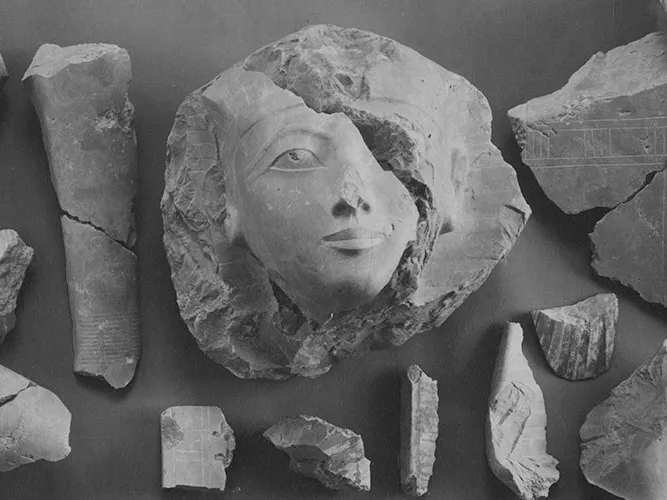
Fragments of a limestone statue of Hatshepsut, photographed in 1929 sourced from Smithsonian