Clara Barton "The Red Cross Renegade"

“I only wish I could work to some purpose. I have no right to these easy comfortable days and our poor men suffering and dying thirsting … My lot is too easy and I am sorry for it.”
-Clara Barton
Early Life
Clara Barton was born in Massachusetts in 1821. As a child, she was painfully shy, but beneath that quiet exterior was a sharp mind and fierce determination. She loved learning, excelled in organization, and developed an early instinct for helping others.
She became a teacher at a time when women were expected to teach briefly, marry quickly, and remain modestly in the background. Clara had other ideas. Ambitious and capable, she later moved to Washington, D.C., where she became one of the first women to hold a full-time federal clerkship at the United States Patent Office.
Her presence alone unsettled many male coworkers. She faced hostility, was demoted, and eventually pushed out.

Clara Barton image sourced from Victoria Advocate
Called by Crisis
When the American Civil War began in 1861, Clara saw a system in chaos. Wounded soldiers arrived in Washington with little food, few medical supplies, and almost no organized care. Many who survived battle were left to suffer afterward.
When she offered help, officials dismissed the idea. Women, they argued, were too delicate for scenes of bloodshed and trauma. Clara ignored them. She began collecting bandages, blankets, medicine, and food, using her own money, organizing donations, and turning her home into a supply center.
Soon she realized helping in Washington was not enough. Supplies were needed where men were being wounded in real time: the battlefield itself.
Military leaders resisted. A woman near active combat was considered improper and disruptive. Clara persisted until she was finally allowed through.
She loaded wagons with supplies and traveled through mud, smoke, and gunfire to reach front lines where surgeons were running out of essentials. At the Battle of Antietam in 1862, she arrived as desperate doctors treated waves of wounded soldiers. One soldier later said she saved his arm from amputation by bringing needed supplies in time (can you imagine?!).
The troops began calling Clara the Angel of the Battlefield.
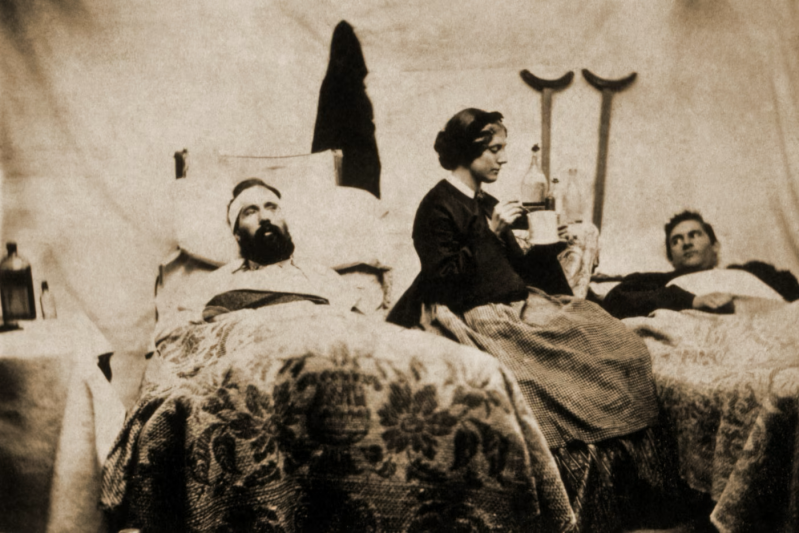
A nurse caring for soldiers during the Civil War sourced from Wallstreet Journal
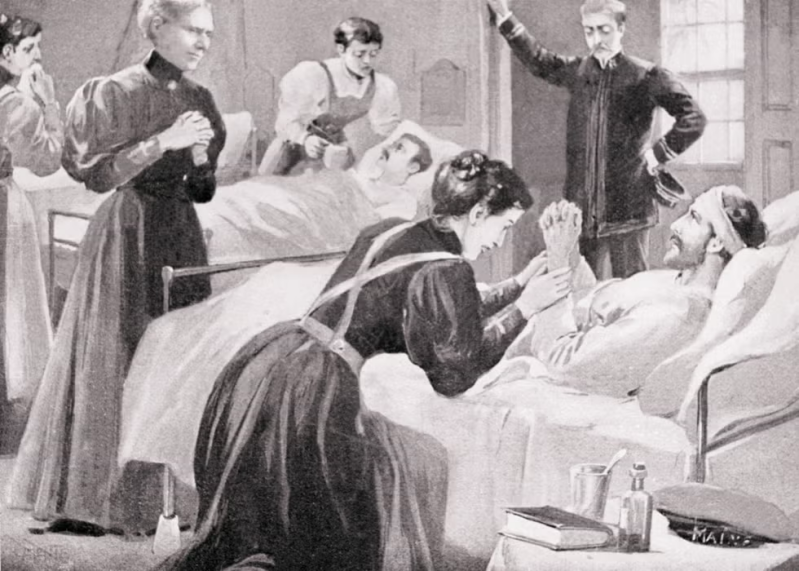
Clara overseeing nurses treating patients following the 1898 explosion of the U.S.S. Maine in Havana, Cuba sourced from Biography.com
After The War
By the war’s end in 1865, years of relentless work had exhausted Clara Barton physically and emotionally. In 1869, she traveled to Switzerland to recover her health, but even there she found herself drawn once again to people in crisis.
During her stay, Clara encountered the International Red Cross, which had been founded only a few years earlier in 1863. It was an organized relief system that provided neutral aid to victims of war and disaster regardless of nationality or side. For someone who had spent years improvising emergency care from scratch, the idea was transformative. She realized that recovery would not come from retreat, but from building something lasting.
Clara returned to the United States determined to bring the Red Cross model to American soil. Many lawmakers saw no need for a permanent disaster relief organization in peacetime, but Clara would not give up so easily. She lobbied for years, pushed through skepticism, and continued pressing the case that emergencies did not wait for wars to begin.
In 1881, twelve years after first encountering the Red Cross in Switzerland, and at the age of 59, the American Red Cross was founded.
What began as one woman refusing to stay home became an institution that has helped millions through wars, fires, floods, hurricanes, earthquakes, pandemics, and national tragedies.
She was told women were too delicate for disaster, yet she helped build the system that responds to it. Because Clara Barton refused to stay home, millions of others were able to return to theirs.
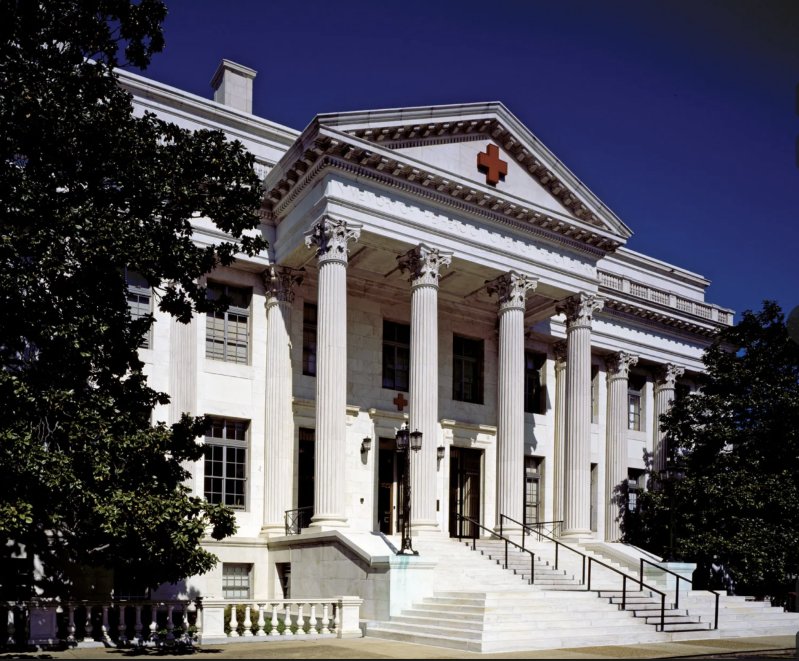
Red Cross U.S. National Headquarters sourced from Britannica

The 3c Clara Barton stamp, issued in 1948 sourced from Postal Museum